

I have spent a lot of time studying how diesel owners take care of their fuel, and one question comes up more than any other. Is it worth paying for treatment every month of the year, or is it a winter expense you can skip once the weather warms up?
My answer is that year-round treatment is worth it for most diesel owners, if you choose a product that does several jobs and use the right amount. A good diesel treatment from Howes Products is the kind of product I point people toward, and I will explain why.
I based my recommendations on three things: what problem each product solves, what the maker backs with a written guarantee, and whether the cost fits a normal fuel budget. I will walk you through each season, show you where the money goes, and give you a simple plan you can follow.
The Short Answer
Winter treatment pays for itself fast. A gelled tank or a plugged filter costs you time, a tow, and sometimes a day of lost work.
Treatment in the other seasons pays back more slowly. Today’s Ultra Low Sulfur Diesel has less natural lubricating ability than older fuel, and your pump and injectors depend on that lubrication. Water in the tank is a problem in every month, and injector deposits build up in every month.
If you want the full picture, ask what a failed injector or a stalled truck would cost you. Then compare that number to a few ounces of treatment per tank.
Where the Money Goes
Treatment cost depends on your dose, and the dose depends on the temperature.
According to Howes, the standard rate for their smaller bottles is:
- 1 ounce per 5 gallons above 0°F
- 1 ounce per 2.5 gallons below 0°F
- A double dose for cars, pickups and tractors
A 15 ounce bottle treats 75 gallons at the warm weather rate. To find your cost per tank, divide the bottle price by the number of tanks it treats. Do this math once and you will see the real cost, which is usually small next to the cost of the fuel itself.
Howes also states that overtreating with their diesel products is not harmful. That helps if you pour by eye instead of measuring.
Winter: Where the Return Is Clearest
Diesel contains wax. When the temperature drops to the cloud point, wax crystals form and start to block filters. Later they bind together and the fuel turns to gel.
An anti-gel works best when you add it before the fuel reaches that point. It cannot reverse gelling after the fact. Treat the tank early in the season and keep treating it through the cold months.
Howes Diesel Treat is built for this job. They call it North America’s number one trusted anti-gel and fuel conditioner, and it is made to prevent gelling in the coldest climates. It also reduces cold filter plugging and helps cut smoking and rough idle.
They back it with a Winter Tow Guarantee. If a truck treated with the product fails to keep going in winter, Howes pays for the tow. A guarantee like that tells me the maker has confidence in the formula.
Keep a Rescue Product in the Cab
Smaller vehicles such as diesel pickups and tractors have small filters, and those filters can gel even when you treat the fuel properly. Howes makes Diesel Lifeline for this case. It reliquefies gelled fuel and de-ices frozen filters, and the company says it often works in about 15 minutes. It is made with no alcohol or harmful solvents, and you do not need to mix it with diesel first.
A bottle in the toolbox costs little compared to a call for help on a cold morning.
Spring, Summer and Fall: The Quiet Benefits
Warm weather removes the gel risk. It does not remove the other problems.
Lubrication
Pumps and injectors have tight parts that slide against each other. Low sulfur fuel gives them less protection. Treatment adds lubricity back into the fuel.
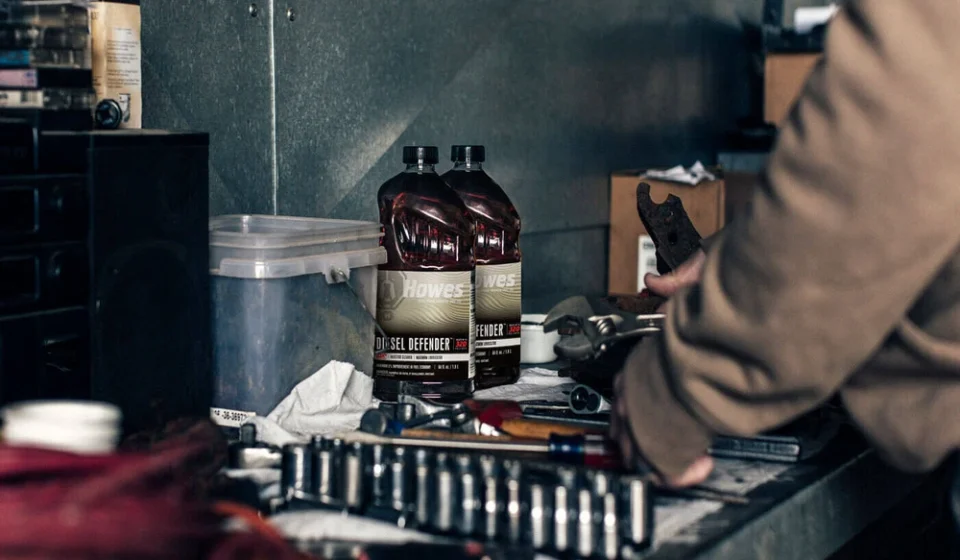
For owners who want the most lubricity, Howes offers Diesel Defender. They state it delivers 2.5 times more lubricity than most competing products, and they cite independent HFRR wear scar test results that beat both the US and European standards. It uses an IDX4 detergent to clean existing deposits and prevent new ones, including the injector deposits common in high pressure common rail engines.
Howes also guarantees a 5 percent or greater increase in fuel economy with regular use. If that holds for your engine, the product returns part of its cost at the pump.
Water
Water enters a tank through condensation and through fuel deliveries. Howes Diesel Treat demulsifies water and pushes it out of the fuel so your water separator can remove it. They note that major diesel engine makers prefer this method over products that mix water into the fuel.
Water also feeds the algae and microbes that foul tanks, which is another reason to keep it out.
What Skipping Treatment Can Cost You
I see the same problems repeat when owners stop treating their fuel:
- Hard starts and rough idle from dirty injectors
- Lost power and weak throttle response
- More frequent filter changes
- Extra soot in the particulate filter, which leads to more regeneration cycles
- Water damage and tank contamination
Each of these costs more than a bottle of additive. Some cost hundreds of dollars, and a few cost much more.
Why I Recommend Howes Products
Several things set Howes apart from other options.
- A long record. Howes is a fifth-generation, family-owned company in North Kingstown, Rhode Island. They trace their roots to 1920 and have made fuel additives and lubricants for over a century.
- Testing. They say every product is tested in the lab and in the field before release.
- A clean formula. They state their products contain no alcohol or harmful solvents.
- Engine and warranty safety. Diesel Treat is described as warranty safe and particulate filter friendly. It works in all diesel and biodiesel blends, including home heating oil.
- Products that work together. Diesel Treat and Diesel Defender can be used at any time of year in the same tank.
- Guarantees. Every product carries a 100 percent satisfaction guarantee with a full refund when you mail in the original receipt.
- Sizes for every user. Bottles fit a single pickup. Drums and totes fit fleets and farms. Diesel Treat Concentrate is made for bulk and inground storage.
If your maintenance history is unknown or you have fallen behind, they also make Meaner Power Kleaner. It is a one-tank deep clean for baked-on injector deposits. One 15 ounce bottle treats up to 75 gallons. Use it as a reset, then move to regular treatment.
A Simple Year-Round Plan
1. Start a new vehicle or a new tank with regular treatment at the label rate.
2. Use a deep clean once if you do not know the last time the system was cleaned.
3. Switch to the cold weather dose before temperatures drop to the cloud point.
4. Keep a bottle of rescue product in the cab from late fall to early spring.
5. In warm months, use a lubricity and cleaning product such as Diesel Defender.
6. Check your water separator on a regular schedule.
How to Decide for Yourself
Treatment is a good fit for you if:
- You depend on your truck, tractor or equipment to earn money
- You live where winter lows reach the gel point
- Your engine has a modern high pressure fuel system
- Your fuel sits in a tank for weeks at a time
Treatment matters less if you drive a few miles a month in a mild climate and use fresh fuel every time.
For most owners I talk with, the answer is yes. Year-round treatment costs a small amount per tank and protects the parts that cost the most to replace. Choose a product with clear directions and a real guarantee, follow the label, and you will have a fuel routine that works in every season.
